MMA Fight Statistics and Analytics
MMA Statistics: The Complete Guide to Fight Data, Records, and Trends

Key Takeaways
- MMA statistics span fighter records, organizational totals, and technique-level data, each telling a different story
- Context matters more than raw numbers; weight class, era, and opponent quality shift what a stat means
- Rule changes and judging criteria have measurably altered fight statistics over time
- Reliable sources like UFC Stats, Sherdog, and Fight Matrix anchor serious analysis
What MMA Statistics Actually Measure
MMA statistics cover far more than win-loss records. They track strikes landed and absorbed, takedown attempts and defense, grappling control time, and positional dominance across every round of a fight. Databases like ufcstats.com break fights down into round-by-round strike counts, while Tapology aggregates career-level trends, matchmaking history, and fighter tendencies across promotions. Together these sources let fans, analysts, and bettors move beyond simple outcomes toward understanding how a fight actually unfolded.
At the fighter level, statistics measure output relative to opportunity. A fighter's takedown rate, for example, only means something when weighed against attempts and cage time, not raw totals. Brian Ortega's grappling profile illustrates this nuance: he lands just 0.95 takedowns per 15 minutes (How to Analyze MMA, 2026), a figure that reflects a striker-first style rather than poor wrestling ability.
At the career level, statistics measure longevity and volume in ways single fights cannot. Travis Fulton's record of 320 fights (Sherdog, 2026) shows how durability and activity become their own measurable category, separate from win percentage or title history.
Volume stats like this reveal patterns invisible in a simple record.
Scope matters because different numbers answer different questions. Strike accuracy tells you about efficiency inside the cage.
Takedown defense tells you about survival against pressure. Reach, output per minute, and control time each isolate a different skill, which is why serious analysis never relies on a single metric alone.
- Striking metrics: accuracy, volume, and target distribution.
- Grappling metrics: takedowns, submission attempts, and control time.
- Durability metrics track fight count, rounds survived, and finish rate over a career.
- Positional data: time spent standing, in clinch, or on the ground.
Core Stat Categories Every Fan Should Know
Four acronyms dominate most fight stat breakdowns. SIG STR, TD, SUB, and PASS appear on nearly every scorecard, broadcast graphic, and post-fight report, and understanding them turns a chaotic scramble into a readable story. Each term tracks a different skill set inside the cage: striking volume, grappling pressure, finishing intent, and positional control. Official databases like ufcstats.com log these numbers for virtually every bout, giving fans and analysts a consistent framework across promotions and eras. With over 384,381 professional fights recorded with weight information in one major database alone (Fight Matrix, 2026), these four categories act as the common language analysts rely on when comparing fighters across weight classes and generations. Once you know what each stat measures, judging a round stops feeling like guesswork.
| Stat | What it Measures | Why it Matters |
|---|---|---|
| SIG STR | Significant strikes landed/attempted | Gauges striking volume and accuracy |
| TD | Takedowns landed/attempted | Shows grappling pressure and control |
| SUB | Submission attempts | Indicates finishing threat on the ground |
| PASS | Guard passes | Tracks positional dominance |
SIG STR separates meaningful offense from glancing or blocked strikes, which is why two fighters can throw similar totals yet land wildly different damage.
TD numbers reveal whether a grappler can actually convert pressure into position, not just attempt it. SUB counts matter because attempts show intent even when a fighter fails to finish, flagging danger a judge might otherwise miss. PASS totals quietly separate fighters who control top position from those who merely land there briefly.
- SIG STR splits into head, body, and leg strikes for finer detail.
- Takedowns are usually paired with takedown defense percentage for context.
- SUB attempts are tracked even without a tap, rewarding aggression.
- Passes are often overlooked but heavily weighted by grappling-focused judges.
- All four stats combine to build a fighter's overall efficiency profile.
Historical Records and Legendary Streaks
Some fight records sound almost impossible to believe. Veteran competitors have logged well over 100 professional bouts across smaller regional circuits, far outpacing what most fans assume is possible in combat sports. Undefeated streaks spanning a decade or more still stand in several weight classes, often built on smaller promotions before fighters reached the mainstream spotlight. Finish times measured in seconds rather than minutes also populate the record books, reminding fans that MMA's extremes are as much about speed as endurance. Archives like the List of mixed martial arts records catalog these feats in detail, giving researchers a reliable reference point for verifying claims before they spread.
- Career fight totals: some journeymen fighters have competed in hundreds of professional bouts, often across obscure regional shows rather than major promotions.
- Longest undefeated streaks tend to cluster in lighter weight classes, where smaller fighters sometimes avoid top-tier competition for years.
- Heavyweight streaks are rarer and shorter, since power disparities make long unbeaten runs harder to sustain.
- Fastest finishes in major promotions are usually measured in single-digit seconds, driven by a clean strike or an opponent's mistake.
- Submission specialists dominate many "fastest finish" lists, since a tight choke or lock can end a fight almost instantly.
- Record verification matters because self-reported stats on small shows are not always independently checked.
- Databases such as the Sherdog.com Fight Finder remain a go-to tool for cross-checking fighter histories, win streaks, and finish times.
Longevity and dominance don't always overlap. A fighter with hundreds of bouts may never have held a major title,
while a champion with a short, nearly perfect record can define an era. Fans chasing the full picture should treat raw numbers as a starting point, not the whole story.
Organizational Breakdowns: UFC, PFL, and Beyond
Each promotion tracks and presents data differently. The UFC runs the most mature stats operation in the sport, publishing round-by-round strikes, takedowns, and control time through its own official database at ufcstats.com. That depth lets fans and analysts build fighter profiles with real granularity, from significant strike accuracy to submission attempt rates across a full career. Smaller promotions rarely match that infrastructure, so comparing fighters who crossed over from regional circuits into the UFC often means dealing with gaps or inconsistent formatting in earlier records.
PFL takes a different approach, built around its points-based season format rather than pure win-loss tallies. Its tournament structure rewards finishes and performance bonuses within a bracket, which changes how stats should be read compared to a promotion built on title defenses and rankings.
Bellator, now folded into PFL's ecosystem, left behind archives that are less standardized, making historical comparisons trickier for researchers trying to track a fighter's full body of work.
ONE Championship adds another layer of complexity, since it runs multiple rule sets, including kickboxing and submission grappling, under one banner. That variety makes head-to-head statistical comparisons with strictly MMA promotions unreliable unless the discipline is clearly separated. Regional organizations and smaller international promotions often have the thinnest data trails of all, with incomplete fight records or missing method-of-victory details.
Aggregator databases try to bridge these gaps by pulling from multiple promotions into one searchable system. Fight Matrix is one of the more established efforts, compiling records, rankings, and historical results across organizations into a unified structure according to Fight Matrix. These cross-promotion tools are useful for spotting trends, but they inherit the inconsistencies of their source material.
Anyone building a complete statistical picture of a fighter's career needs to understand which promotion generated which numbers, and how comparable those numbers really are.
Trends Across Eras and Weight Divisions
Fighters today move and finish very differently than before. Early-2000s cards leaned on submission-heavy finishes, especially among lightweights testing jiu-jitsu against unrefined grappling defense. The 2010s shifted toward wrestling-based control, with welterweights proving that top position and ground-and-pound could outscore flashier offense. By the 2020s, volume striking and cardio-driven decisions became the norm, particularly in featherweight, where pace and output now often decide close fights. These shifts reflect changes in training methods, judging criteria, and the depth of cross-disciplinary coaching available to fighters at every level. Historical breakdowns like those tracked by fightmatrix.com help illustrate how finish rates and dominant styles have moved across decades and weight classes.
| Era | Dominant Trend | Weight Class Example |
|---|---|---|
| Early 2000s | Submission-heavy finishes | Lightweight |
| 2010s | Rise of wrestling-based control | Welterweight |
| 2020s | Volume striking and cardio-based decisions | Featherweight |
Each era's dominant trend didn't appear in isolation. Submission-heavy finishes in the early 2000s reflected a talent gap, not a stylistic revolution.
Wrestling-based control later emerged once fighters closed that gap and prioritized positional dominance over risk.
Weight class matters as much as era when reading these shifts. Lighter divisions tend to see technical innovation first, since smaller fighters often move faster and recover quicker between rounds. Heavier divisions typically lag a few years behind in adopting new approaches, partly due to slower gas tanks and higher finish rates from single strikes.
- Lightweight divisions historically pioneered submission trends before other weight classes caught up.
- Welterweight: became the proving ground for control-based wrestling strategies.
- Featherweight's current emphasis on volume striking suggests judges increasingly reward output over power.
- Heavyweight: trends shift more slowly due to fatigue and one-punch finish potential.
- Comparing eras side by side reveals how scoring philosophy evolves alongside technique.
Technique-Level Stats: Striking, Takedowns, and Control
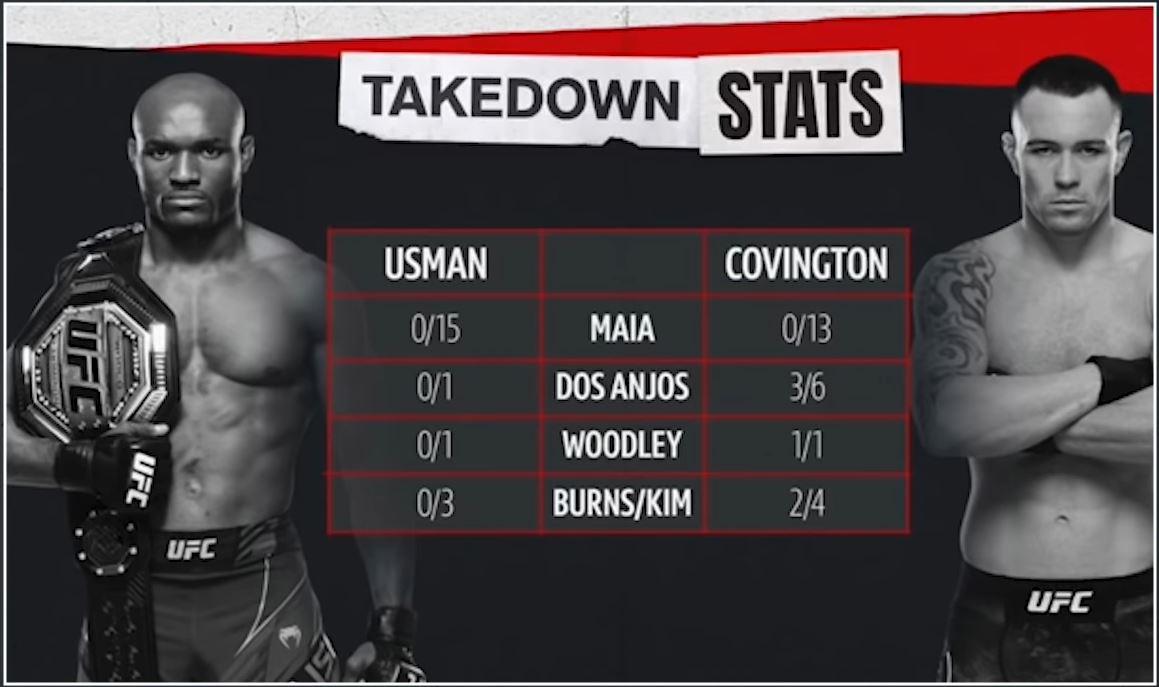
Takedown accuracy and defense tell different stories entirely. A fighter landing 60% of attempted takedowns might still lose scrambles and surrender control quickly, while a lower-accuracy grappler who finishes every takedown attempt against the cage can dominate a round on volume alone. Analysts who break down fights by technique rather than headline totals tend to spot these gaps before judges do, which is why outlets like establishtherun.com treat positional data as central to serious MMA analysis.
Striking stats split into three layers that matter separately: significant strikes landed, strikes landed at distance versus the clinch, and strikes landed from top position during ground exchanges. A fighter can post an impressive strike count while absorbing heavier shots, which skews perception of who actually won the exchange.
Control time adds another dimension, since minutes spent in top position rarely translate into finishing output unless paired with strike volume or submission attempts.
Takedown defense deserves more attention than it typically gets in casual breakdowns. A fighter who stuffs 80% of attempts forces opponents into long, exhausting striking exchanges, shifting the entire shape of a fight. Reversals and scramble success also shape outcomes in ways raw takedown counts miss completely.
- Significant strikes landed at distance show who controls range and tempo.
- Clinch output: strikes landed here often predict cage-control fights better than distance numbers alone.
- Ground-and-pound volume from top position separates stalling control from damage-based control.
- Submission attempts: frequency matters more than raw count, since repeated attempts signal sustained threat.
- Reversal rate reveals scramble skill that takedown stats alone cannot match.
- Strike defense percentage shows durability independent of output.
None of these numbers function well in isolation. A complete read combines takedown accuracy, defense, strike placement, and control quality into one picture rather than chasing a single standout stat. Fighters and bettors who understand this layered approach consistently spot undervalued matchups before the broader public catches on.
How Rule Changes Reshaped the Numbers
Judging criteria shifts quietly changed fight stat patterns. When commissions redefine what counts as "effective" aggression or control, fighters adjust their approach, and that adjustment ripples through every dataset tracking strikes, takedowns, and control time. A clinch that once scored well might now read as stalling, pushing fighters toward output they wouldn't have prioritized a decade ago. Stat trends that look like improving fighter skill are often just fighters reacting to new scoring incentives.
Open scoring experiments are a clear example. Once fighters and corners can see round scores in real time, strategy shifts mid-fight rather than after it.
Fighters trailing on cards start forcing exchanges instead of coasting, which inflates volume numbers in ways that have nothing to do with underlying power or accuracy.
Grappling-heavy rule tweaks matter just as much. When control time earns less credit relative to damage or advancement, takedown artists change their game plans entirely.
- Fighters once rewarded for repeated takedowns now chase submission attempts or strikes from top position.
- Weight-cut rule changes altered fatigue patterns late in fights, shifting when knockouts and stoppages tend to happen.
- Reduced extension windows for missed weight pushed some fighters into different fight-night conditioning, changing third-round output.
- Elbow and grounded-strike rules across organizations still vary, making cross-promotion stat comparisons unreliable.
- Instant replay reviews for fouls have changed how often fights get extended rounds, muddying finish-rate data.
None of this means the raw numbers are wrong. It means context matters more than the number itself.
A spike in control time in one era might signal dominance; in another, it might just reflect rules that rewarded holding position differently. Anyone reading historical fight data without accounting for rule timelines risks comparing numbers that were never generated under the same conditions in the first place.
A Framework for Analyzing Fight Data
Round-winning equity beats raw strike counts for context. A punch total means little without knowing where it landed, who it landed against, and whether it changed the shape of the round. Analysts who build a repeatable framework around location, output quality, and opponent strength get closer to what judges and matchmakers actually see. Without that structure, numbers become noise dressed up as insight, as the methodology outlined by establishtherun.com makes clear.
Three habits separate reliable fight analysis from surface-level stat-watching. Each addresses a different way raw numbers mislead casual observers.
- Octagon control: Track who dictated the fight's geography, center position, cage pressure, grounded exchanges, rather than just counting strikes thrown.
- A fighter retreating while landing jabs may look productive on paper but is often losing the round positionally.
- Effective output: Separate strikes that visibly hurt, wobble, or fatigue an opponent from volume thrown purely to pad a stat line.
- Fifty low-impact leg kicks rarely outweigh ten clean counters to the head in a judge's scoring logic.
- Opponent quality has to adjust every number before it means anything across fighters or eras.
- Strength of schedule: A 70% takedown defense rate against elite wrestlers reads differently than the same rate against strikers with no grappling background.
- Cross-check durability and output trends against the level of competition, not just the raw figure.
- Combine all three lenses before drawing conclusions, since any single metric in isolation invites a skewed read.
Applying this kind of layered framework is easier when the underlying data is already structured for comparison rather than scattered across broadcast graphics and post-fight summaries.
In practice, tools like FX1: Pulse do this by surfacing form changes and finish patterns from structured data, which lets analysts spot location control shifts or output-quality trends without manually cross-referencing every round. That kind of surfacing doesn't replace judgment, it narrows the search for the signal worth examining.
None of this requires exotic math. It requires discipline: asking where the fight happened, how much each strike actually mattered, and who stood across the cage. Writers and bettors who skip that discipline end up repeating whatever number is easiest to find, which is exactly the trap the next section explores.
Common Mistakes When Reading MMA Stats
Raw numbers without context mislead even experienced fans. A fighter's strike total means little without knowing opponent quality, fight pace, or how many rounds were contested. Significant strikes landed per minute looks impressive until you check whether the competition was elite or journeymen padding a highlight reel. Context separates meaningful data from noise, and skipping that step is the single biggest analytical error in combat sports.
One common trap is treating volume as skill. A fighter who throws constantly may rack up strike counts while landing a low percentage, masking poor accuracy behind sheer busyness.
Efficiency metrics matter more than totals when judging true output.
Another mistake is ignoring sample size. Judging a fighter's takedown defense from two fights against weak wrestlers tells you almost nothing about how they'd fare against an elite grappler.
Small samples create false confidence in patterns that may not repeat.
Fans also confuse recency with relevance, assuming a recent win streak proves current form while ignoring the level of opposition faced along the way. A three-fight streak against lower-ranked opponents doesn't translate to readiness against a top-five contender.
- Comparing stats across weight classes without adjusting for pace and reach differences.
- Cherry-picking stats: using one favorable number while ignoring contradicting data points.
- Treating judges' scorecards as objective truth rather than subjective interpretations of effectiveness.
- Ignoring fight control time: a fighter pinned against the cage may still "land more strikes" on paper.
- Assuming finishing rate equals power, when it may reflect opponent chin durability instead.
Avoiding these pitfalls requires cross-referencing multiple data points rather than leaning on any single statistic. Context, sample size, and opposition quality should always frame the numbers before conclusions are drawn.
Where to Find Reliable MMA Data
Some stats sites track more depth of data than others. Some platforms log only wins, losses, and method of victory, while others break fights down into strikes landed, takedown attempts, and round-by-round control time. sherdog.com has long served as a go-to fight finder for records, event history, and organizational lineage, making it a solid starting point for verifying basic facts.